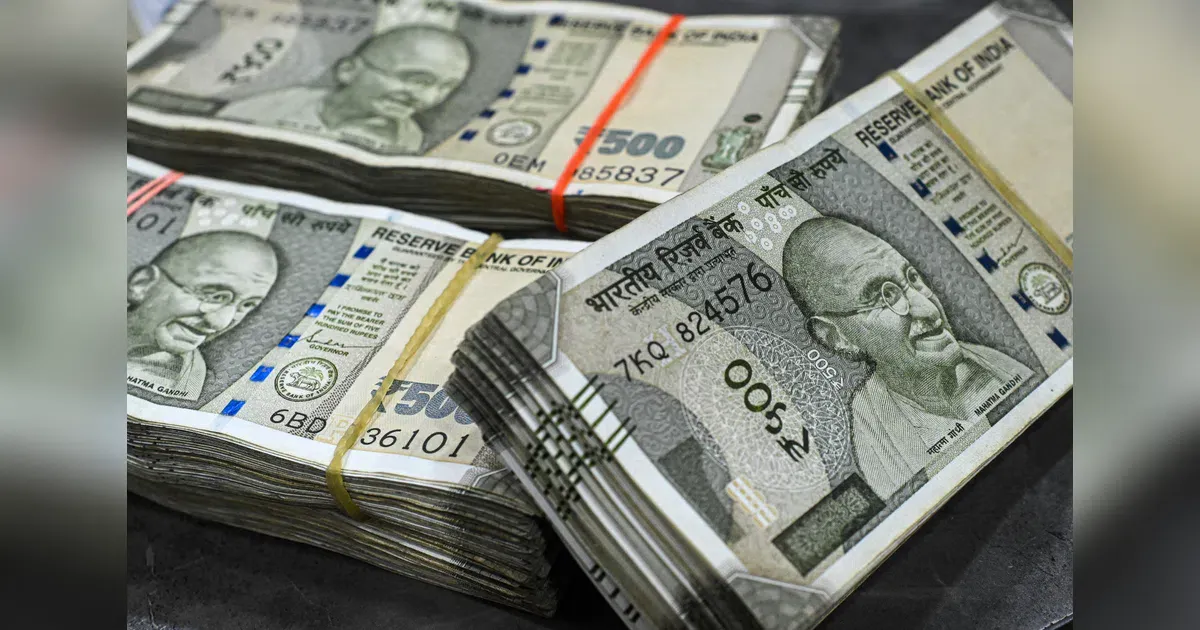
The Indian rupee has witnessed its sharpest fall in more than five weeks, reflecting heightened uncertainty in global markets amid escalating geopolitical tensions. Currency markets reacted swiftly to the developments, as investors shifted toward safer assets, putting pressure on emerging market currencies including the rupee. The sudden decline has once again highlighted how closely interconnected global politics and financial markets have become.
While short-term currency fluctuations are common, a steep fall within a short period often signals broader concerns related to investor confidence, capital flows, and macroeconomic stability. The recent movement in the rupee has sparked discussions among economists, policymakers, and market participants about the possible causes and long-term implications.
Understanding the Recent Decline
A currency weakens when demand for it falls relative to other global currencies, particularly the US dollar. In the latest instance, the rupee’s drop appears to be closely linked to rising geopolitical tensions across key global regions. Political uncertainty often leads global investors to adopt a cautious approach.
During periods of instability, investors typically pull money out of riskier or emerging markets and move funds into traditionally safer assets such as the US dollar, gold, or US government bonds. This shift creates additional demand for the dollar while reducing demand for currencies like the rupee, leading to depreciation.
The magnitude of the recent fall suggests that markets were reacting not just to isolated developments, but to a broader climate of uncertainty.
The Role of Geopolitical Tensions
Geopolitical events have a direct and often immediate impact on currency markets. Escalating conflicts, trade disputes, sanctions, and diplomatic strains can disrupt global trade flows and energy supplies. These disruptions increase volatility in commodities such as crude oil, which is particularly important for India as a major importer.
When oil prices rise sharply due to geopolitical stress, India’s import bill increases. This widens the trade deficit and raises demand for US dollars to pay for imports. As a result, the rupee comes under additional pressure.
Moreover, global investors become more risk-averse during such periods. They prefer to hold assets in stable economies, leading to capital outflows from emerging markets. Even temporary withdrawals of foreign portfolio investments can significantly influence currency movement.
Impact on Financial Markets
The rupee’s decline has ripple effects across financial markets. A weaker currency can affect stock markets, bond yields, and investor sentiment. Export-oriented sectors may benefit in the short term, as their goods become more competitive internationally. However, import-dependent industries face higher costs.
Stock markets often respond sensitively to currency fluctuations. Companies reliant on imported raw materials or foreign debt may see increased expenses. On the other hand, information technology and pharmaceutical firms, which earn substantial revenue in foreign currencies, may gain from a weaker rupee.
Bond markets also feel the pressure. If foreign investors pull out funds from Indian debt markets, bond yields may rise. This increases borrowing costs for businesses and the government.
Inflation Concerns and Consumer Impact
One of the most immediate concerns associated with currency depreciation is inflation. A weaker rupee makes imports more expensive. Since India imports a significant portion of its crude oil and certain essential commodities, rising import costs can eventually translate into higher fuel and retail prices.
Higher fuel prices tend to impact transportation costs, which then affect the prices of goods and services across sectors. This chain reaction can contribute to inflationary pressures in the economy. For households, this may mean increased expenses on fuel, groceries, and other daily necessities.
The central bank closely monitors such developments, as maintaining price stability remains a key priority.
Central Bank’s Possible Response
When currency volatility increases sharply, central banks may step in to stabilize markets. This can be done through direct intervention in the foreign exchange market by selling dollars from reserves to support the domestic currency.
Additionally, interest rate policies play a role. Higher interest rates can attract foreign investment, thereby increasing demand for the rupee. However, raising rates also affects domestic borrowing costs and economic growth.
Policymakers must strike a delicate balance between controlling inflation, supporting growth, and maintaining currency stability. Any response is usually measured and aligned with broader economic objectives.
Global Factors at Play
The rupee’s performance cannot be viewed in isolation. Global factors such as US Federal Reserve policy decisions, global economic growth trends, and commodity price movements significantly influence emerging market currencies.
If the US dollar strengthens due to expectations of tighter monetary policy or safe-haven demand, most emerging market currencies tend to weaken. In such situations, the rupee’s decline may not reflect domestic weakness but rather global dollar strength.
It is important to analyze the broader context to understand whether the depreciation is part of a global trend or driven by country-specific factors.
Trade Balance and External Sector
India’s trade balance plays a crucial role in currency stability. A widening trade deficit increases demand for foreign currency, putting downward pressure on the rupee. Geopolitical tensions that disrupt global trade routes or increase commodity prices can worsen this imbalance.
However, strong services exports, remittances from overseas Indians, and stable foreign direct investment inflows can provide support to the currency. These factors help offset pressure from higher imports.
Maintaining a stable external sector remains essential for minimizing currency volatility.
Long-Term Perspective
While the recent decline may appear sharp, currency markets are inherently volatile. Short-term fluctuations are influenced by sentiment, speculation, and global events. Over the long term, economic fundamentals such as growth rate, fiscal discipline, inflation control, and foreign exchange reserves determine currency stability.
India’s foreign exchange reserves act as a buffer against excessive volatility. Strong reserves provide confidence to investors that the central bank has the capacity to manage short-term pressures.
Historically, the rupee has experienced phases of depreciation and recovery, reflecting changing global and domestic conditions. Therefore, a temporary decline does not necessarily indicate structural weakness.
Implications for Businesses and Investors
Businesses involved in international trade need to manage currency risk carefully. Hedging strategies using forward contracts or options can help mitigate losses arising from exchange rate fluctuations.
For investors, currency movements can influence returns on international investments. A weaker rupee may increase returns on foreign assets when converted back to domestic currency. Conversely, foreign investors may experience reduced returns if the rupee depreciates significantly.
Diversification and prudent risk management become particularly important during periods of heightened uncertainty.
The Road Ahead
Much depends on how geopolitical tensions evolve in the coming weeks. If tensions ease and global markets stabilize, investor confidence may return, supporting emerging market currencies including the rupee.
On the other hand, prolonged uncertainty or further escalation could keep volatility elevated. Monitoring global commodity prices, capital flows, and policy signals from major economies will provide insights into future currency movements.
Domestic economic indicators such as inflation data, industrial output, and fiscal performance will also influence market sentiment.
Conclusion
The rupee’s steepest decline in over five weeks underscores the deep connection between global geopolitics and financial markets. While short-term volatility can create uncertainty, it is essential to view such movements within a broader economic framework.
Geopolitical tensions, rising oil prices, shifting investor sentiment, and global dollar strength all contribute to currency fluctuations. Policymakers remain vigilant, balancing growth, inflation control, and currency stability.
For businesses, investors, and households, staying informed and adopting prudent financial strategies can help navigate periods of market turbulence. Currency movements are a reflection of complex global dynamics, and while volatility may persist in the short term, long-term economic fundamentals remain the true anchor of stability.