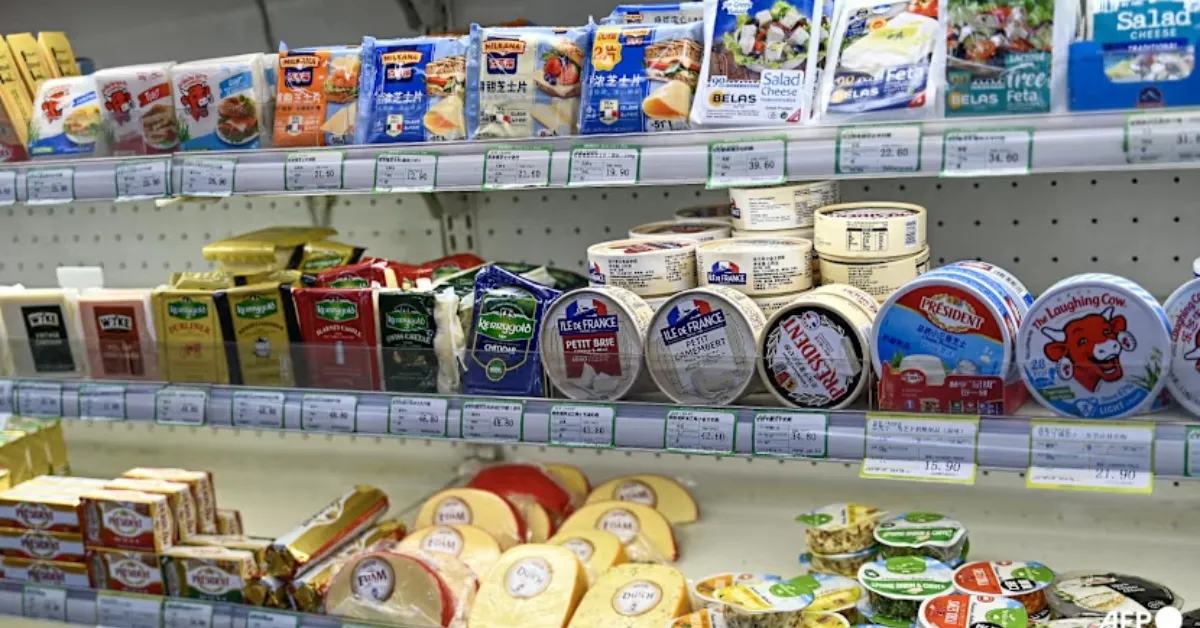
Trade relations between the European Union and China have entered another tense phase after Beijing announced a provisional anti-dumping duty of up to 42.7 percent on certain dairy imports from the European Union. The move, justified by Chinese authorities as necessary to protect the domestic dairy industry from harm, has raised concerns across global markets and added fresh strain to already fragile EU-China economic ties.
Dairy products may represent only a segment of bilateral trade, but this decision carries broader implications. It signals China’s increasing willingness to use trade defense measures and reflects the growing friction between major economic blocs amid shifting global supply chains and protectionist tendencies.
What the Provisional Duty Means
China’s decision introduces a provisional anti-dumping duty that applies immediately to select dairy products imported from the European Union. A rate as high as 42.7 percent is significant and can sharply reduce the competitiveness of European dairy exporters in the Chinese market.
A provisional duty typically follows an initial investigation phase, during which authorities determine that imports may be entering the market at unfairly low prices. While such duties are temporary, they often remain in place for months while investigations continue, causing immediate disruption to trade flows.
For European exporters, this duty could mean reduced shipments, higher prices for Chinese consumers, or even a temporary exit from the market.
China’s Rationale: Protecting the Domestic Dairy Industry
Chinese authorities have cited harm to the domestic dairy sector as the primary reason for imposing the duty. According to official statements, the influx of European dairy products allegedly undercut local producers, affecting pricing power and profitability.
China’s dairy industry has been undergoing a period of restructuring and consolidation. Domestic producers are still recovering from past food safety scandals and rising production costs. Imported dairy, often perceived as higher quality, has historically captured a significant share of the Chinese market.
By imposing duties, Beijing aims to give local producers breathing room to stabilize operations, improve margins, and compete more effectively against foreign brands.
Why the European Union Is in Focus
The European Union is one of the world’s largest dairy exporters, with countries such as Ireland, France, Germany, and the Netherlands playing a major role. EU dairy products enjoy strong demand in China due to their reputation for quality, safety, and variety.
However, strong export performance can also make a sector vulnerable to trade action. When imports rise sharply or prices fall, they can trigger complaints from domestic industries, leading to investigations and duties.
This case underscores how trade success can sometimes lead to trade friction, especially in sensitive sectors like agriculture.
Impact on European Dairy Exporters
For European dairy companies, China represents a key growth market. The provisional duty threatens to disrupt established supply chains and revenue streams.
Smaller exporters may feel the impact most acutely, as they lack the financial flexibility to absorb higher costs or pivot quickly to alternative markets. Larger firms may attempt to offset losses by redirecting exports to other regions, but this could depress prices elsewhere.
There is also the risk of long-term damage to relationships with Chinese distributors and consumers, which can take years to rebuild once disrupted.
Implications for Chinese Consumers and Businesses
While the duty is designed to protect domestic producers, it may have mixed effects within China. Imported dairy products often cater to premium segments, including infant nutrition and specialized food products.
Higher duties could lead to increased prices or reduced availability of certain imported dairy items. This may benefit local producers in the short term but could limit choice for consumers and businesses that rely on specific imported ingredients.
Over time, the effectiveness of the measure will depend on whether domestic producers can meet demand in terms of both quantity and quality.
Broader Context of EU-China Trade Relations
This development comes at a time when EU-China trade relations are already under strain. Disputes over technology, industrial subsidies, market access, and geopolitical alignments have created a complex backdrop for economic engagement.
The dairy duty may be interpreted by some observers as part of a broader pattern of trade assertiveness by China. Similarly, the European Union has been exploring stronger trade defense tools to counter what it sees as unfair competition.
Such reciprocal measures risk escalating into wider trade tensions if not managed carefully through dialogue and negotiation.
Legal and Diplomatic Path Ahead
The provisional nature of the duty means the investigation is ongoing. European exporters and EU authorities are expected to engage with Chinese regulators, providing data and arguments to contest the findings.
Diplomatic channels may also be activated, with the European Commission seeking consultations to ensure the process aligns with international trade rules. If the dispute escalates, it could eventually reach multilateral forums, adding another layer of complexity.
Past experience suggests that outcomes can vary widely, from duties being reduced or withdrawn to becoming permanent fixtures.
Global Trade Signals and Market Reactions
Global markets tend to watch such moves closely, as they often signal shifts in trade policy direction. The imposition of a high provisional duty reinforces perceptions of rising protectionism, particularly in strategic or politically sensitive sectors.
For other exporting nations, this case serves as a reminder of the importance of diversification. Heavy reliance on a single market, even a large one like China, can expose industries to sudden policy changes.
It also highlights the increasing role of trade remedies as tools of economic strategy rather than purely technical measures.
What This Means for the Future of Dairy Trade
The dairy sector globally is facing multiple pressures, including volatile input costs, climate challenges, and changing consumer preferences. Trade barriers add another layer of uncertainty.
If the duty remains in place or becomes permanent, European exporters may accelerate efforts to expand in other regions, while China may double down on boosting domestic capacity and self-reliance.
In the long run, sustainable trade relationships depend on balancing domestic industry protection with the benefits of open markets. How China and the European Union navigate this issue will shape not only dairy trade but also broader economic cooperation.
Conclusion
China’s decision to impose a provisional duty of up to 42.7 percent on European Union dairy imports marks a significant moment in EU-China trade relations. While Beijing frames the move as necessary to protect its domestic dairy industry, the implications extend far beyond a single sector.
European exporters face immediate challenges, Chinese consumers may see reduced choice, and global markets are reminded of the fragile nature of international trade in a shifting economic landscape. As investigations continue and diplomatic efforts unfold, the outcome of this dispute will be closely watched for what it reveals about the future direction of global trade policy and economic cooperation.