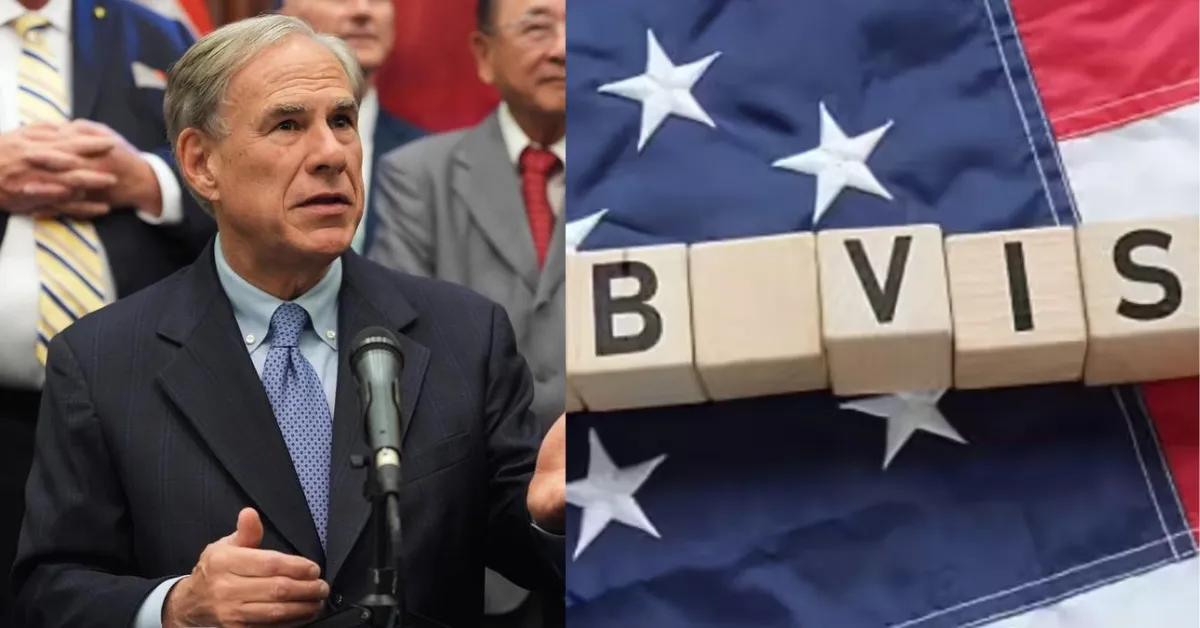
Texas has taken a decisive and controversial step in its employment policy by halting the hiring of H-1B visa holders across state colleges and government agencies. Framed under the slogan “Need Texans First,” the move reflects a broader push to prioritize local workers in public sector jobs. The decision has triggered intense debate across academic circles, immigrant communities, business groups, and political commentators, as it raises fundamental questions about workforce needs, talent shortages, and the role of international professionals in publicly funded institutions.
The policy shift comes at a time when immigration remains a deeply polarizing issue in the United States. While supporters argue that taxpayer-funded jobs should primarily benefit state residents, critics warn that the decision could weaken higher education, research output, and innovation in Texas. Understanding the implications of this move requires examining its background, objectives, and likely long-term effects.
What the Texas Decision Entails
Under the new directive, state-run colleges, universities, and government agencies in Texas are no longer permitted to hire new employees under the H-1B visa program. The H-1B visa allows US employers to hire foreign professionals in specialty occupations that typically require at least a bachelor’s degree, such as engineering, computer science, medicine, and academic research.
While the policy does not automatically terminate existing H-1B employees, it effectively closes the door on future international hires in state institutions. This means that vacancies in public universities, research labs, and state departments must now be filled exclusively by US citizens or permanent residents, with a particular emphasis on Texas residents.
State officials have described the move as a necessary correction to ensure that public sector opportunities benefit local workers first, especially amid concerns about job competition and wage pressures.
The Political and Economic Context
The decision aligns with a broader political narrative emphasizing local employment and reduced reliance on foreign labor. In Texas, where state leadership has often taken a strong stance on immigration enforcement, the policy fits into an ongoing effort to appeal to voters concerned about job security and economic opportunity.
Economically, Texas continues to experience rapid population growth and a strong labor market in many sectors. Supporters of the hiring halt argue that there is no justification for recruiting foreign professionals when qualified Texans are available and seeking work.
However, critics counter that the issue is not unemployment but skills mismatch. They argue that certain specialized roles, particularly in advanced research and higher education, require expertise that may not always be readily available locally.
Impact on Higher Education Institutions
State colleges and universities are among the most affected by the new policy. Public universities in Texas have long relied on international faculty and researchers to fill specialized teaching and research positions. Fields such as artificial intelligence, biomedical sciences, engineering, and advanced mathematics often draw talent from a global pool.
By restricting H-1B hiring, institutions may face difficulties filling niche roles that require years of specialized training and international research experience. This could slow down research projects, reduce grant competitiveness, and limit the diversity of academic perspectives in classrooms.
University administrators have expressed concern that the policy could make Texas institutions less attractive in the global academic market. Competing universities in other states may continue to recruit internationally, potentially gaining an edge in research output and rankings.
Effects on Research and Innovation
Texas has invested heavily in positioning itself as a hub for innovation, technology, and scientific research. Public universities play a central role in this strategy, often collaborating with private industry and federal agencies on cutting-edge projects.
International researchers on H-1B visas have historically contributed significantly to patents, publications, and startup creation. Limiting their entry into state institutions could slow innovation pipelines and reduce the flow of new ideas.
Research is increasingly global, with cross-border collaboration seen as a strength rather than a liability. Critics argue that the hiring halt sends a signal that Texas is less open to global talent, which could have ripple effects beyond academia, influencing how international partners view the state.
Arguments Supporting the Hiring Halt
Supporters of the policy emphasize fairness to local taxpayers and workers. They argue that public funds should not be used to sponsor visas when qualified Texans are available. From this perspective, prioritizing residents is seen as a reasonable and responsible use of state resources.
There is also concern about wage suppression. Some believe that reliance on H-1B workers can depress wages by increasing labor supply in specialized fields. Limiting foreign hiring, they argue, could strengthen bargaining power for local professionals and encourage institutions to invest more in training and retaining domestic talent.
Additionally, proponents frame the decision as a matter of accountability. State agencies and colleges, they argue, should align their hiring practices with the interests and values of the communities they serve.
Criticism and Legal Questions
Opponents of the policy have raised both practical and legal concerns. From a practical standpoint, they argue that the H-1B program exists precisely to address skill shortages that cannot be easily met domestically. Removing access to this talent pool could harm institutional performance.
Legally, questions have been raised about whether a blanket ban on H-1B hiring at state institutions could conflict with federal immigration law. While states have discretion over hiring, immigration policy is federally governed, and any perceived discrimination against lawful visa holders could face legal challenges.
Civil rights groups and academic associations have also criticized the policy for fostering exclusion and undermining diversity. They argue that international scholars and professionals enrich educational environments and contribute to cultural exchange.
Broader Implications for the Workforce
The Texas decision may influence other states considering similar measures. If replicated elsewhere, such policies could reshape the landscape of public sector employment across the country.
For international students studying in Texas, the hiring halt may affect career planning. Many students pursue advanced degrees with the hope of transitioning to H-1B roles in academia or public research institutions. Reduced opportunities could lead them to seek employment in other states or countries, potentially resulting in a loss of talent trained within Texas itself.
Private sector employers are watching closely as well. While the policy applies only to state institutions, it contributes to a broader narrative that could influence future immigration and labor policies.
Long-Term Consequences for Texas
In the long run, the impact of the hiring halt will depend on how effectively Texas institutions adapt. If local talent pipelines are strengthened and adequately meet demand, the policy may achieve its intended goals. However, if skill gaps persist, the state could face challenges in maintaining its competitive edge in education and research.
Reputation also matters. Texas has benefited from being seen as business-friendly and growth-oriented. Policies perceived as restrictive or inward-looking could alter that perception, particularly in sectors that thrive on global collaboration.
Balancing local priorities with global realities is a complex task, and the outcome of this policy will likely shape future debates about workforce development and immigration.
Conclusion
Texas’s decision to halt H-1B hiring at state colleges and agencies marks a significant shift in public sector employment policy. Driven by the principle of putting Texans first, the move reflects broader political and economic concerns about job access and fairness.
At the same time, the policy raises serious questions about talent availability, academic competitiveness, and innovation. As universities, researchers, and policymakers grapple with its consequences, the debate highlights the delicate balance between protecting local workers and remaining open to global expertise.
Whether the decision ultimately strengthens or weakens Texas’s public institutions will become clearer over time. What is certain is that the move has reignited a national conversation about how states should navigate workforce needs in an increasingly interconnected world.